

 Apr 28, 2026
Watch any Indian wedding up close, yet what stands out isn’t only her dress its her Indian Bridal Jewellery. Hidden beneath layers of saree fabric lies proof: her jewelry, which speaks before she does. Suddenly, gold bangles mark time differently. A necklace rests heavier than decoration alone would allow. Only then do you see it: metal tells stories cloth cannot.
Here’s something every bride should know. Jewelry isn’t stuck to one single moment. It moves with you, showing up at dinner, catching light, resting where your collarbone dips when no one else looks.
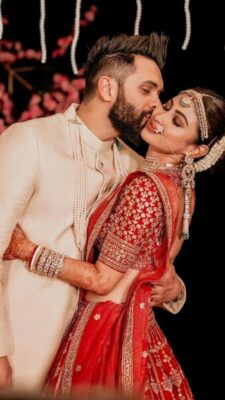
Out pops the image of a mangalsutra every time someone mentions Indian wedding adornments. Then there’s the toe ring, always tagging along. But those are only what sits up top. Drift into different areas, and patterns shift sharply. So sharp, location whispers itself through necklaces, bangles, and even how earrings hang. Spot the details right, and you might name her hometown before she says a word.
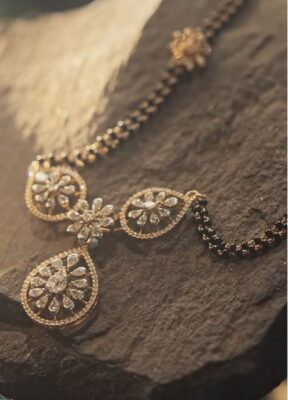
And even across all these differences, the mangalsutra keeps showing up in some form. The design changes, the style changes, but the idea behind it does not.
So here is a closer look at the pieces that actually define marriage across different parts of the country.
Regional Indian Bridal Jewellery That Defines Married Women Across India
Kashmir – Dejhoor: The Sacred Bridal Earring
Among Kashmiri Pandit brides, one piece stands out immediately. The Dejhoor.
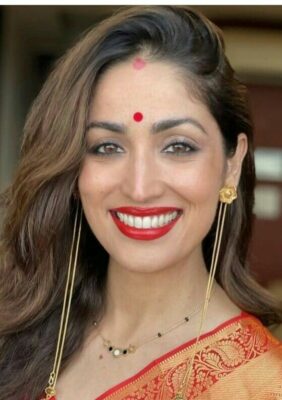
This is not a regular earring. It is long, almost ornamental, and it starts as a sacred thread tied during the wedding. After the ceremony, during the post-wedding rituals, that thread is replaced with gold chains. The piece actually changes form once the ritual is done.
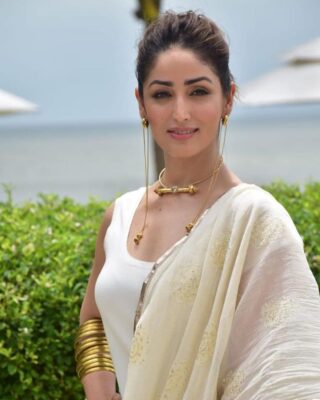
I find that genuinely beautiful. It does not just mark the wedding day. It grows with the bride into her married life.
Bengal – Shankha, Pola and Loha: The Triple Bangle Identity In Indian Bridal Jewellery
In Bengal, you do not need to ask. You can tell a married woman by her bangles.
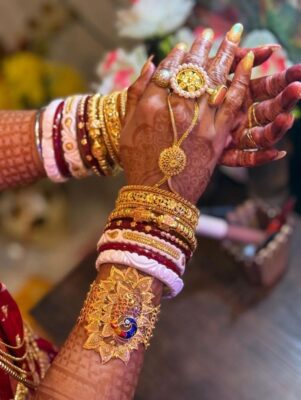
The Shankha Pola alongside the Loha creates a combination that is hard to miss. White, red, and that gold-coated iron bangle together. What I like about this is that these are not reserved for occasions. They are worn daily. That is where Indian bridal jewellery moves from wedding wear into something far more personal.
Tamil Nadu – Thaali Variations That Reveal Community Identity
In Tamil Nadu, the Thaali is central. But what makes it interesting is that it is not uniform across communities.
Different communities have their own designs and symbols attached to them. So it does not just say you are married. It also says where you come from and who your people are.
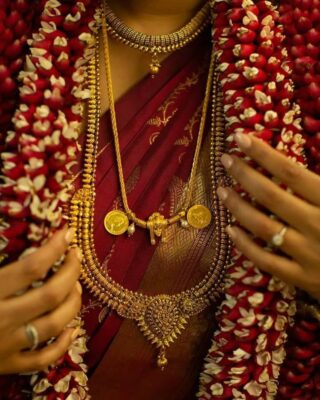
As a planner, this is one of the first things I ask brides about. It adds a layer that makes the whole look personal rather than generic.
Maharashtra – Nath, Jodavi and Ambada Pins as Marital Identity
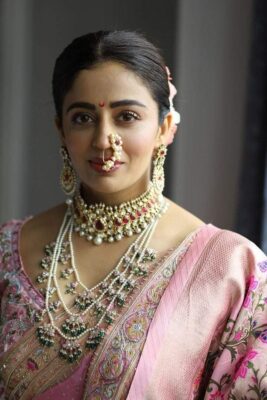
Maharashtrian bridal style is one I genuinely love because it is well-balanced. Nothing feels overdone, but nothing is without meaning either.
The Brahmani Nath is closely associated with married women, especially at traditional functions. The shape is distinct. It has a presence without being heavy.
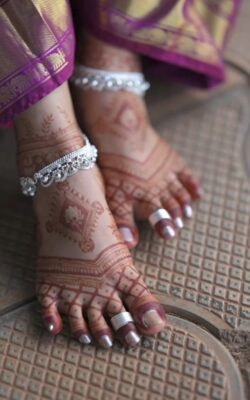
The Jodavi/ silver toe rings are another big part of post-marriage identity. Usually silver, worn daily, simple to look at but carrying a lot of cultural weight.
Then there are the ambada pins that sit in the bridal bun. Small detail, but they tie the whole look together in a way that feels complete.
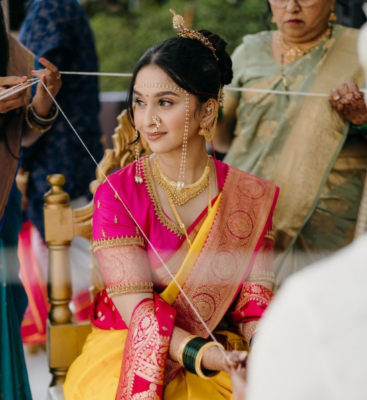
Punjab – Kalire: Symbols of Blessings and Transition
Punjabi weddings have a lot of energy, and the Kalire belong in that space.
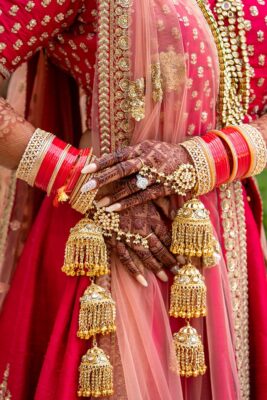
People often treat them as just a wedding accessory, but brides wear them for a while after the ceremony too. That makes them more of a transition marker than a one-day thing. Some brides even personalize their kalire and wear them on special occasions.
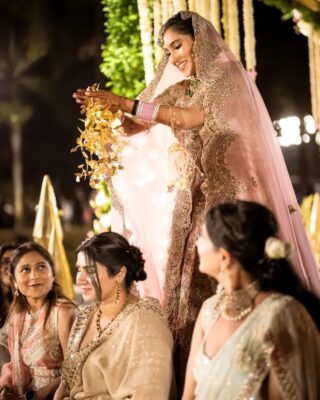
And yes, there is that moment where the bride shakes them over her friends. Playful, but it is part of the whole experience in a way that feels real.
Rajasthan and Gujarat – Borla and Nath as Social Identity
Here, jewellery is bold and meant to be noticed. The Borla sits at the centre of the forehead and gives a very regal quality.
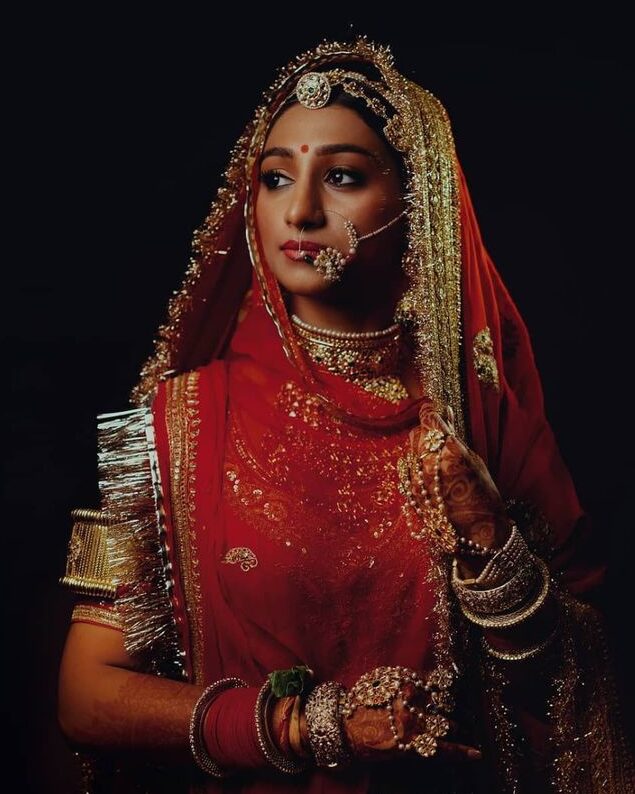
Paired with a large nose ring, the look becomes striking. That is the point. Jewellery in this region is not quiet. It is a statement of identity, and it has always been that way.
Kerala – Minnu: A Fusion of Faith and Marriage in Indian Bridal Jewellery
Kerala takes a different approach. The Minnu is small and simple, tied during the ceremony, but it carries both religious and marital meaning together.
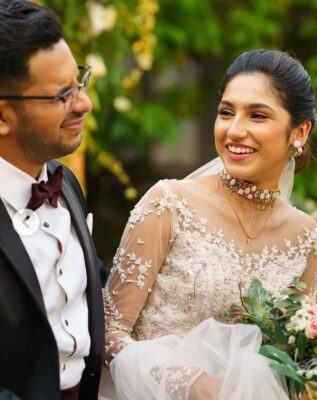
I always find this piece interesting because it shows that jewellery does not need to be elaborate to mean something. Sometimes the smallest pieces carry the most weight.
Assam – Junbiri and Gamkharu Indian Bridal Jewellery
Assamese jewellery feels like wearable craft. The Junbiri and Gamkharu are detailed and often draw from nature, bold without being heavy-handed.
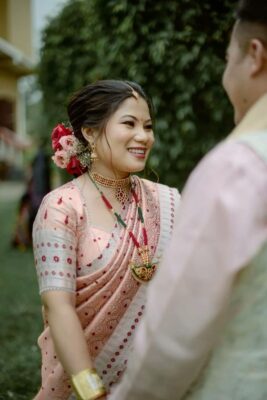
They are worn during important occasions and give the bridal look a distinct character. This is where Indian bridal jewellery starts to feel like culture and craftsmanship coming together in the same piece.
Nepal – Tilhari and Pote: Symbols of Marriage and Longevity
The Tilhari and Pote are part of everyday life for married women in Nepal, not just kept for ceremonies.
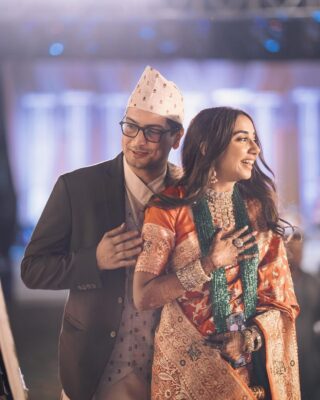
The Tilhari is long and elegant. The Pote is made of multiple strands of beads. Together, they symbolise marriage and the husband’s wellbeing. What I appreciate is how naturally they work as daily wear. Nothing about them feels like they are waiting for an occasion.
A Cultural Identity that is Worn
Looking at all of this together, one thing is clear. There is no single way that marriage is marked in India. Every region has its own pieces, its own symbols, its own logic.
From the Dejhoor to the Minnu, from something highly detailed to something deliberately simple, each piece carries meaning that has nothing to do with how expensive or visible it is.
Indian bridal jewellery is not about dressing up for a day. It is about wearing your culture in a way that stays with you, personal, meaningful, and completely your own.


.jpg)